


The International Baccalaureate Diploma Programme is one of the most rigorous pre-university curricula in the world, and if you are sitting your IB exams for the first time, it is completely normal to have questions — a lot of them. Between the grading system, the exam logistics, the retake policies, and the sheer volume of content across six subjects plus your core components, there is a lot to wrap your head around.
We have compiled the questions IB students ask most frequently and answered each one with the kind of detail you actually need. Whether you are in the middle of revision right now, just starting Year 1 of the diploma, or a parent trying to understand what your child is going through, this guide will give you clarity.

How Is the IB Grading Scale Structured?
This is often the first question students and families ask, and it is worth getting right early because it shapes how you set targets and how universities evaluate your application.
Each IB subject is graded on a scale of 1 to 7, with 7 representing the highest level of achievement. You take six subjects in total — three at Higher Level (HL) and three at Standard Level (SL) — which gives you a maximum of 42 points from your subject grades alone. An additional 3 points can be earned through the combination of your Theory of Knowledge (TOK) essay and your Extended Essay (EE), bringing the theoretical maximum to 45 points.
To earn the IB Diploma, you need a minimum of 24 points. But there are conditions beyond the raw number: no subject can receive a score below 2, and no more than three subjects can score a 3. You also need to complete your Creativity, Activity, Service (CAS) requirements, which are assessed on a pass/fail basis and do not contribute to your point total but are still mandatory.
It is worth understanding that the IB does not use a grading curve. Your result is measured against set standards and grade descriptors, not against the performance of other students. This means your grade reflects your actual mastery of the material, which is one reason universities around the world respect the diploma so highly.
What Are Grade Boundaries, and Why Do They Change?
Grade boundaries are the minimum raw marks required to achieve each grade (1 through 7) in a given subject. Here is the part that surprises many students: these boundaries are not fixed. They shift from one exam session to the next.
The IB sets boundaries after each exam session using statistical analysis, expert review of exam difficulty, and comparison with previous years. If a particular paper turns out to be unusually difficult, the boundaries are adjusted downward so that students are not unfairly penalised. The reverse is also true — an easier paper may have higher boundaries.
This is actually a fairer system than many students realise. It means that a bad day caused by a genuinely harder exam does not automatically tank your grade. What it also means, however, is that you should not fixate on hitting a specific percentage. A raw score of 75% might earn you a 7 in one session but only a 6 in another. Focus on deep understanding of the content rather than chasing a number.
When Are the May 2026 IB Exams?
The May 2026 exam session runs from Friday, April 24 to Wednesday, May 20, 2026. Results are released on July 6, 2026. For students in the Southern Hemisphere, the November 2026 session runs from October 23 to November 13, 2026.
The exam period spans roughly four weeks, and most students will not have exams on every single day. However, the scheduling can be intense — particularly in the third week, which is widely considered the most demanding due to the clustering of science and mathematics papers. Planning your revision around the actual sequence of your exams, rather than studying subjects in the order you enjoy them, is one of the most effective strategies you can adopt.
If you have not already mapped your personal exam timetable into a study planner, now is the time. Seeing your papers laid out visually, with your revision blocks slotted around them, transforms abstract stress into a concrete plan you can execute day by day.
Can I Retake IB Exams?
Yes. The IB offers retake opportunities in both the May and November sessions. You can retake exams in one or more subjects, but there are some important rules to understand.
First, you must retake all components of a subject — you cannot retake individual papers within a subject. If you are retaking IB Biology HL, for example, you sit all three papers again. Internal Assessments (IAs) can also be resubmitted as part of a retake. Second, the highest grade you achieve across your attempts becomes your final result, so there is no risk of a retake replacing a higher score with a lower one.
Retakes do come with additional fees, and you will need to coordinate through an IB World School or approved examination centre. Most students who retake exams do so within three years of their original session. It is also worth noting that while most universities accept retaken scores, some institutions — particularly in the UK — have been known to prefer first-attempt results, so it is wise to check the admissions policy of your target universities before committing to a retake.
How Much Do Internal Assessments (IAs) Actually Matter?
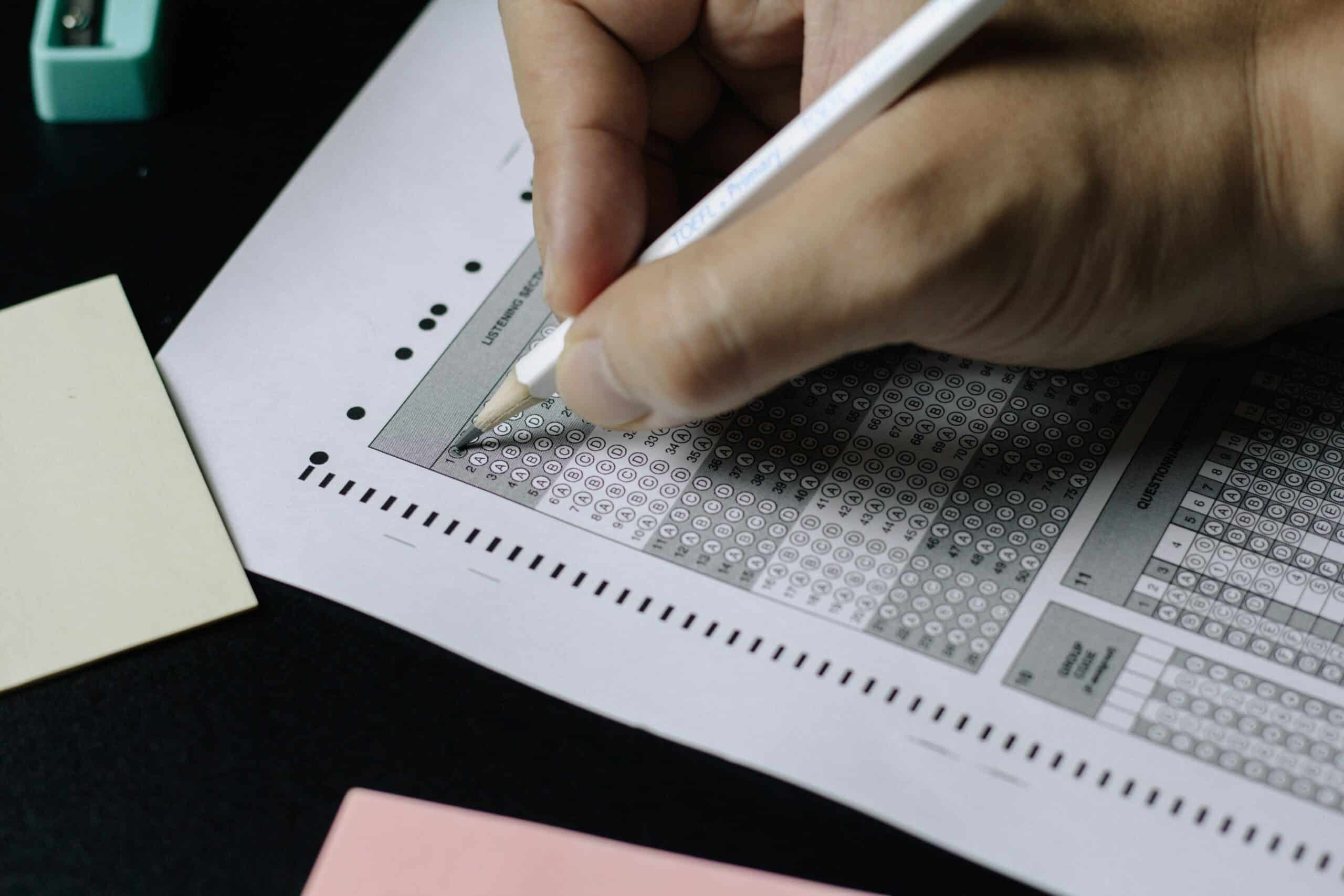
More than many students think. Internal Assessments typically account for 20 to 30 percent of your final grade in each subject, depending on the specific course. In some subjects, the IA is worth as much as a full exam paper.
IAs are initially graded by your teacher and then externally moderated by the IB to ensure consistency across schools worldwide. This moderation process can adjust your score up or down, which is why it is important to follow the assessment criteria precisely rather than relying on your teacher’s informal feedback alone.
The strategic implication is significant: because IAs are completed before the exam period, they represent marks you can bank well in advance. A strong IA can give you breathing room during exams, while a weak one puts pressure on your exam performance to compensate. If you are in Year 1, prioritise your IAs. If you are in Year 2 and your IAs are already submitted, factor their likely contribution into your revision priorities for each subject.
Staying on top of IA deadlines alongside your regular coursework is exactly the kind of juggling act that a task management tool built for students helps you manage. When you can see your IA deadlines, class schedule, and exam dates in a single view, nothing falls through the cracks.
What Is the Extended Essay, and How Does It Affect My Score?
The Extended Essay (EE) is a 4,000-word independent research paper on a topic of your choice, written under the supervision of a faculty advisor. It is one of the three core components of the IB Diploma, alongside TOK and CAS.
Your EE is graded externally on a scale from A (highest) to E (lowest), and it is cross-referenced with your TOK grade on a matrix that awards up to 3 bonus points toward your total diploma score. At the top end, an A in both EE and TOK earns you the full 3 bonus points. At the bottom end, a combination of two E grades is a failing condition for the diploma, regardless of your subject scores.
The EE is more than just a score booster. It is also a significant factor in university admissions, particularly for competitive programmes that value independent research skills. Choose a topic you are genuinely interested in — you will be living with it for months, and authentic engagement shows in the quality of your argument.
How Should I Structure My Revision Schedule?
There is no single correct approach, but the evidence consistently points to a few principles that high-performing IB students tend to follow.
Start earlier than you think you need to. Most IB educators recommend beginning serious, structured revision around six months before your exams. For the May 2026 session, that means starting no later than November 2025. This does not mean studying eight hours a day from the outset — it means building a progressive schedule that ramps up gradually.
Distribute your time proportionally. Allocate roughly 50 to 60 percent more revision time to your HL subjects than your SL subjects, and within that, prioritise the subjects or topics where you are weakest. It is tempting to spend time on subjects you enjoy, but strategic revision targets your biggest point-gain opportunities.
Use past papers relentlessly. Completing past papers under timed conditions is one of the most effective revision strategies available. It familiarises you with question formats, helps you understand examiner expectations through the mark schemes, and builds the time management skills you need during the actual exam. Aim to complete at least 10 to 15 past papers per subject before exam day.
Use active recall over passive re-reading. Flashcards, practice questions, self-testing, and teaching concepts to someone else all outperform simply re-reading your notes. Your brain encodes information more deeply when it has to retrieve it actively.
Building a revision schedule you can actually stick to is half the battle. If you are managing six subjects, CAS logs, an EE, and a social life, a digital planner that syncs across your devices keeps you accountable without adding complexity. Set reminders for each study session, break large topics into subtasks, and track your progress week over week.
What Should I Bring to the Exam — and What Will Get Me Disqualified?
The IB has strict rules about what you can and cannot bring into the exam room, and violations can result in disqualification with zero tolerance.
You will need an approved graphing calculator for mathematics and science papers (check that yours is on the IB’s approved list and that the batteries are fresh), blue or black pens (some schools require specific types that scan well), pencils for diagrams, a ruler, and an eraser. Everything should be in a transparent pencil case.
Do not bring a smartwatch, a phone (even if it is powered off), any notes, or an unapproved calculator. If you are unsure whether a specific item is permitted, ask your IB Coordinator before exam day — not during it. Common mistakes include bringing a calculator with programmes or notes stored in it, wearing a smartwatch out of habit, or using pens with ink that does not scan properly.
Pack your exam kit the night before each paper. It is a small action that eliminates a surprising amount of morning-of stress.
Are IB Exams Going Digital?
Starting with the May 2026 session, the IB is piloting digital (computer-based) exams for select subjects and schools. Language A and Language B subjects are first in line for the rollout. The long-term plan is for all IB exams to be delivered digitally by 2030.
If your school is part of the pilot programme, your IB Coordinator will inform you and provide preparation guidance. The key reassurance is that the digital exams will feature the same questions, structure, and grading standards as their paper-based counterparts. Grade boundaries, marking criteria, and the difficulty level of questions will be consistent across both formats.
If you are sitting digital exams, make sure you are comfortable typing extended responses and navigating an on-screen interface under time pressure. Practice is the best way to build that comfort — ask your school if they can provide mock exams in the digital format.
How Do Universities View IB Scores?
University requirements vary, but the IB Diploma is recognised and respected by institutions in over 100 countries. Most universities publish specific IB score requirements alongside their other admissions criteria.
For standard undergraduate programmes, offers typically fall in the 30 to 38 point range. Highly selective institutions — Oxford, Cambridge, Ivy League universities, and top programmes in medicine and engineering — generally expect 38 points or above, with some requiring 40 to 45. Beyond your total score, many universities also specify minimum grades in specific HL subjects relevant to your intended programme. A total of 36 points with a 4 in HL Mathematics may not meet the entry requirements for an engineering degree, even though 36 is a strong overall score.
In the UK, IB scores are converted to UCAS tariff points for comparison with A-Level applicants. A score of 7 at Higher Level is broadly equivalent to an A* at A-Level. It is worth checking the specific conversion tables used by your target universities, as these can differ slightly between institutions.
What If I Am Feeling Overwhelmed?
This is perhaps the most important question on this list, and the one students are least likely to ask out loud.
The IB is genuinely demanding. You are managing six subjects, a 4,000-word research essay, a TOK presentation and essay, CAS requirements, internal assessments, and a social life — all while being a teenager. Feeling overwhelmed at some point during the programme is not a sign of weakness; it is a rational response to a heavy workload.
The students who handle it best are not necessarily the smartest — they are the most organised. When you know exactly what you need to do each day, the mountain of work shrinks into a series of manageable steps. That is why building a clear, visual system for tracking your commitments matters so much. Whether it is a wall planner, a spreadsheet, or a purpose-built student app, the tool matters less than the habit of using it consistently.
If the overwhelm goes beyond normal stress and starts affecting your sleep, your appetite, or your ability to concentrate, talk to someone — a parent, a teacher, a school counsellor, or a trusted friend. The IB is important, but it is not more important than your wellbeing.
Final Thoughts
The IB Diploma is designed to be challenging, but it is also designed to be achievable. Nearly 90% of candidates who complete the full programme earn the diploma. The students who thrive tend to share a few qualities: they plan ahead, they ask for help when they need it, and they treat organisation not as a chore but as a competitive advantage.
If you are looking for a tool that brings your classes, exams, assignments, and revision schedule into a single, synced view — MyStudyLife is free and built specifically for students navigating exactly this kind of workload. Set it up once, and spend the rest of your IB journey focused on what actually matters: learning the material, sitting the exams, and earning the score you are capable of.


