


With the 2026 AP Exams running May 4–15, here’s how to make every remaining study session count — and how MyStudyLife can keep you on track through exam week.
The AP exam window is nearly here, and whether you’re feeling quietly confident or full-on panicking, the next few days matter more than you think. The good news? Strategic, focused review right now can genuinely move your score up a full point or more. This guide breaks down last-minute study strategies by subject type, shows you how to avoid the most common mistakes, and walks you through setting up MyStudyLife so nothing falls through the cracks. (New to structured study planning? Start with our study tips blog for the fundamentals.)
Your AP Exam Week Overview

The 2026 AP Exams run across two weeks in May:
- Week 1: May 4–8
- Week 2: May 11–15
- Late Testing: May 18–22 (alternate exam versions, school approval required)
Morning sessions begin between 8:00 and 9:00 a.m. local time, with afternoon sessions starting between 12:00 and 1:00 p.m. If you’re sitting for multiple exams, those two weeks can get hectic fast — which is exactly why planning ahead isn’t optional.
Set Up Your Exam Schedule in MyStudyLife
Before diving into content review, spend ten minutes getting organized. Open MyStudyLife and add each AP exam to your exam calendar with the correct date, time, and location. Then set reminders for two key moments: a “final review” alert the evening before each exam and a “pack your bag” reminder the morning of. MyStudyLife’s smart reminders will ping you across all your devices, so even if you lose track of time studying, you won’t miss a thing.
Use the task feature to create a study checklist for each subject, and break large review goals into subtasks. For example, your AP Biology task might include subtasks like “review Unit 5 free-response prompts,” “redo ecology practice set,” and “rewatch mitosis lecture notes.” Checking these off as you go keeps motivation high and gives you a clear picture of what’s left.
Universal Last-Minute Study Strategies (Every AP Subject)

Before we get into subject-specific advice, these strategies apply no matter what you’re studying.
Prioritize Free-Response Practice Over Passive Review
If you only do one thing this week, make it this: practice writing free-response answers under timed conditions. Most students lose points not because they don’t know the material, but because they run out of time or don’t answer in the format the exam expects. The College Board’s AP Exam Practice page has released free-response questions from prior years for every subject — use them.
Use the Pomodoro Technique to Fight Burnout
Cramming for six hours straight is less effective than three focused, timed sessions with real breaks. MyStudyLife has a built-in Pomodoro timer that structures your review into productive intervals. Set it for 25-minute focus blocks followed by five-minute breaks, and take a longer 15–20 minute break after every four cycles. This approach is especially important in the final stretch, when fatigue can undermine everything you’ve already learned.
Target Your Weakest Units, Not Your Strongest
It’s tempting to review the topics you already know well — it feels productive, and it’s more comfortable. But your score gains will come from shoring up weak areas. Go through your class notes or textbook table of contents and honestly rate each unit on a 1–5 confidence scale. Anything below a 3 gets priority. Anything at a 4 or 5 gets a quick skim at most.
Sleep Is Non-Negotiable
This is not generic advice. Research on memory consolidation consistently shows that the brain encodes and organizes new information during sleep. Pulling an all-nighter the night before an AP exam actively harms your recall the next morning. Aim for seven to eight hours the two nights leading up to each exam. (For more on building sustainable habits that actually stick, check out our guide to the best college study tips — most of them apply to AP prep too.)
Subject-Specific AP Study Tips
STEM Subjects (AP Calculus AB/BC, AP Physics, AP Chemistry, AP Biology, AP Statistics, AP Computer Science, AP Environmental Science)
Focus on formulas and when to use them. For calculus, physics, and chemistry, knowing which equation applies to which scenario is half the battle. Create a one-page formula sheet for each subject — the act of writing it out by hand is itself a powerful review technique, and you’ll know exactly where your gaps are.
Redo problems you got wrong. Don’t just re-read solutions — actually rework the problems from scratch without looking at the answer. If you can solve it independently, you’ve learned it. If you can’t, that’s a priority topic.
For AP Biology and Environmental Science: These exams are heavily conceptual. Spend time on experimental design questions and data interpretation. Practice describing trends in graphs and explaining what a control group tells you. The AP Biology Course and Exam Description is worth skimming for the science practices they expect you to demonstrate.
For AP Computer Science A: Focus on array/ArrayList manipulation, recursion tracing, and writing classes. Run through past free-response questions on the College Board’s practice page and time yourself — the most common mistake is writing syntactically correct code that doesn’t actually answer the prompt.
For AP Statistics: Know when to use each inference procedure. Create a flowchart: “Is this a proportion or a mean? One sample or two? Paired or independent?” Being able to navigate that decision tree quickly will save you on both multiple choice and free response.
MyStudyLife tip: Create a separate task for each unit within your STEM subjects, with subtasks for “formula review,” “practice problems,” and “free-response attempt.” Set due dates staggered across the remaining days so you’re not trying to cover everything on the last night.
Humanities Subjects (AP US History, AP World History, AP European History, AP Art History)
Think in thesis statements. History exams reward students who can construct an argument, not just list facts. Practice writing thesis statements for past Document-Based Questions (DBQs) and Long Essay Questions. Time yourself: you should be able to draft a strong thesis within five minutes of reading the prompt.
Review by theme, not by chapter. In the final stretch, chronological review is too slow. Instead, review thematically: trace economic changes across eras, follow the development of political movements, or compare social structures across civilizations. This kind of cross-period thinking is exactly what the AP History exams test.
For AP Art History: Focus on the 250 required images. Use flashcards (digital or physical) and quiz yourself on artist, period, material, and most importantly, function and context. Being able to discuss why a work was created is more valuable than memorizing its date.
MyStudyLife tip: Use the task repeating feature to schedule a daily 20-minute “thesis writing drill” for each history exam you’re taking. Consistency matters more than marathon sessions here.
English (AP English Language, AP English Literature)
Practice timed essays, full stop. Both AP English exams are essay-heavy, and the most reliable way to improve is to write under timed conditions. For AP Lang, practice rhetorical analysis and argument essays. For AP Lit, practice prose and poetry analysis. Give yourself exactly 40 minutes per essay — the same time pressure you’ll face on exam day.
Build a flexible evidence bank. For AP Lit, have three to four novels, plays, or works you know deeply enough to use for the open prompt. Choose works that are thematically versatile — a book like Beloved, Hamlet, or The Great Gatsby can be applied to prompts about identity, power, morality, and more.
For AP Language: Focus on rhetorical devices you can actually identify and discuss in 40 minutes. Don’t try to name every device — instead, get really good at explaining how tone, diction, and structure work together to build an argument.
MyStudyLife tip: Schedule two timed essay practices before each English exam, spaced at least a day apart. Add them as tasks with specific due dates and set a reminder 30 minutes before each one so you have time to get settled and focused.
Social Sciences (AP Psychology, AP Human Geography, AP Government, AP Economics, AP Comparative Government)
Vocabulary is everything. These exams are terminology-dense. If you don’t know the precise meaning of “ethnocentrism,” “fiscal policy,” or “selective attention,” you’ll struggle on multiple choice even if you understand the concepts intuitively. Spend time on flashcard review — apps like Anki or Quizlet pair well with your MyStudyLife schedule, and you can use the task feature to build daily flashcard sessions right into your planner.
For AP Psychology: Focus on the biological bases of behavior, sensation and perception, and research methods — these units are heavily tested and students often underestimate them.
For AP Economics (Macro and Micro): Practice graphing. The free-response section requires you to draw and label graphs accurately. Practice supply and demand shifts, the production possibilities curve, aggregate demand/aggregate supply, and the Phillips curve until you can sketch them from memory.
For AP Government: Review landmark Supreme Court cases. You’re expected to know the rulings and their significance — not just the names.
MyStudyLife tip: Create a “vocabulary review” repeated task that fires every morning for the days leading up to each social science exam. Even 10 minutes of flashcard review with your morning coffee makes a measurable difference over several days.
Languages (AP Spanish, AP French, AP Chinese, AP Japanese, AP German, AP Italian, AP Latin)
Immerse yourself in the target language. Switch your phone language, listen to podcasts, or watch shows in the language you’re studying. For AP Spanish, try News in Slow Spanish. For AP French, France 24 offers accessible news content. Passive immersion in the days before the exam helps your brain switch into that linguistic mode more fluidly.
Practice the presentational writing and speaking tasks. The interpersonal and presentational components of modern language APs trip students up because they require real-time production. Practice recording yourself responding to prompts, then listen back and identify grammatical patterns you consistently get wrong.
For AP Latin: Focus on sight-reading passages and reviewing the required readings from Caesar and Vergil. Practice translating short passages under timed conditions.
MyStudyLife tip: Add daily immersion sessions as tasks — even a 15-minute podcast listen or a short journaling session in your target language — and track your streak. Consistency with language review is more impactful than a single long session.
Arts and Design (AP Music Theory, AP Studio Art/2-D/3-D/Drawing)
For AP Music Theory: Practice sight-singing and dictation daily. These skills deteriorate quickly without regular practice, so don’t skip days in the final week. Review part-writing rules and practice harmonizing melodies with proper voice leading.
For AP Art and Design: If you haven’t finalized your portfolio, your digital submission deadline is May 8. Focus on writing clear, concise artist statements that connect your sustained investigation to your materials, processes, and ideas. Have someone outside your art class read your written responses — if they can’t understand your intent, revise.
Exam Day Logistics: Don’t Let the Small Things Derail You
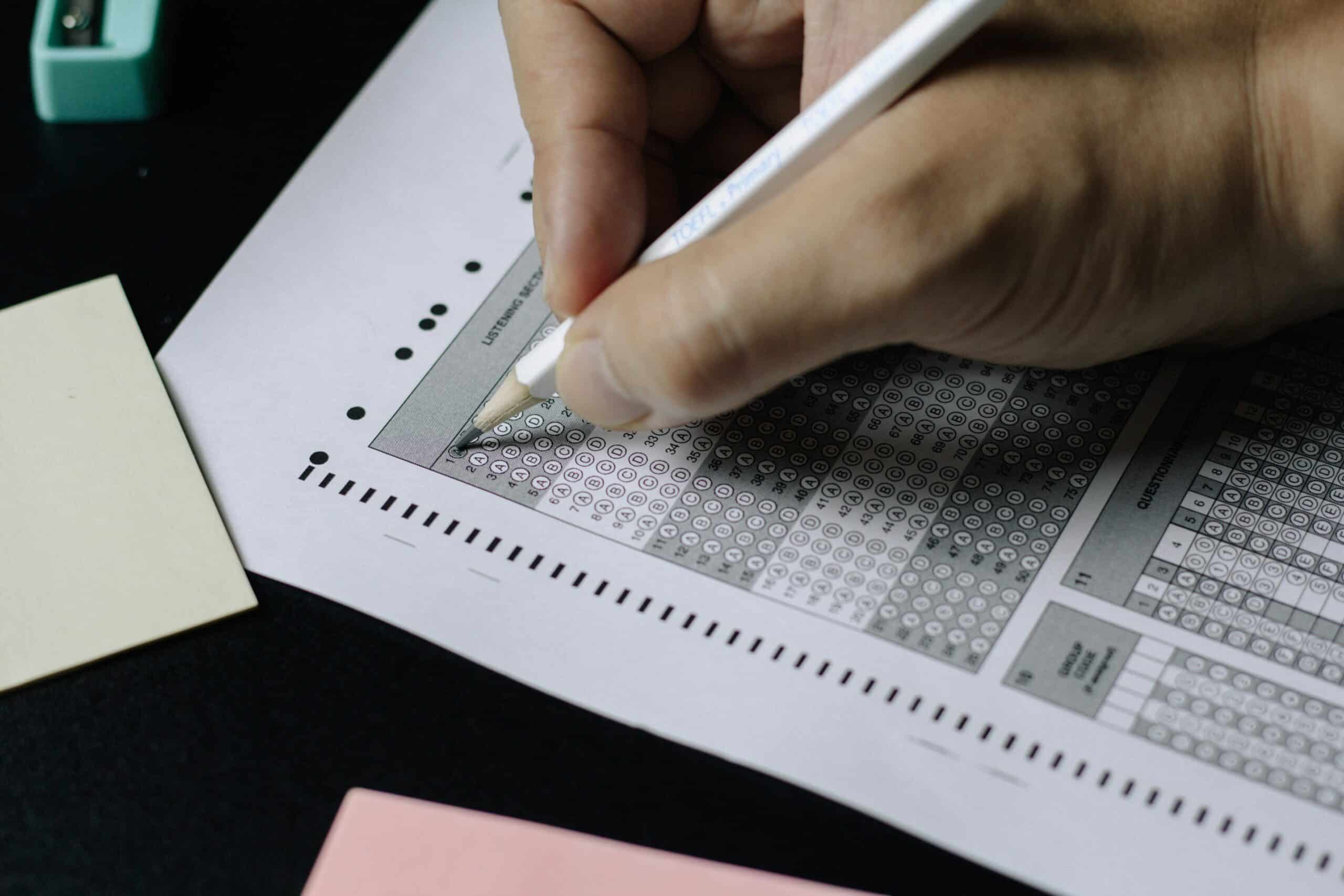
A surprising number of students lose points — or panic — over avoidable logistical issues. Here’s your pre-exam checklist:
The night before: Pack your bag with at least two sharpened No. 2 pencils, pens with black or dark blue ink, your school ID, an approved calculator (for math and science exams), and a snack and water for the break. Check whether your exam is paper or digital — most 2026 AP Exams are delivered through the Bluebook app, so make sure the app is installed, updated, and tested on your approved device.
The morning of: Eat a real breakfast. Set a MyStudyLife reminder to wake up with enough time to eat, review your one-page notes, and arrive at school at least 15 minutes before the scheduled start.
Between exams: If you have multiple AP exams the same week, resist the urge to immediately start cramming for the next one after you finish. Give yourself at least an hour to decompress before shifting focus.
Building Your Final Study Schedule in MyStudyLife
Here’s how to structure your remaining days using MyStudyLife’s planning tools:
- Add every AP exam to your exam calendar with date, time, and location.
- Create a task for each subject with subtasks for each review activity (formula review, practice FRQs, vocabulary flashcards, timed essays, etc.).
- Set due dates so that your hardest review work is done at least one day before the exam — the day before should be light review only.
- Turn on reminders for every task and exam. MyStudyLife syncs across iOS, Android, and web, so you’ll get notified wherever you are.
- Use the Pomodoro timer during every study session to protect your focus and prevent burnout.
- Review your dashboard daily. MyStudyLife’s dashboard shows your upcoming exams and overdue tasks at a glance — use it every morning to recalibrate your priorities.
You’ve Got This
AP exams are a marathon compressed into a sprint. The students who perform best in the final week aren’t the ones who study the longest — they’re the ones who study the smartest. Prioritize active practice over passive reading, target your weak spots, protect your sleep, and let MyStudyLife handle the logistics so you can focus on what matters: showing up prepared.
Good luck — and remember to breathe.
Ready to organize your AP exam prep? Download MyStudyLife for free and start planning your final study sessions today.


