


How to Study for AP Exams in 8 Weeks (2026 Study Plan)
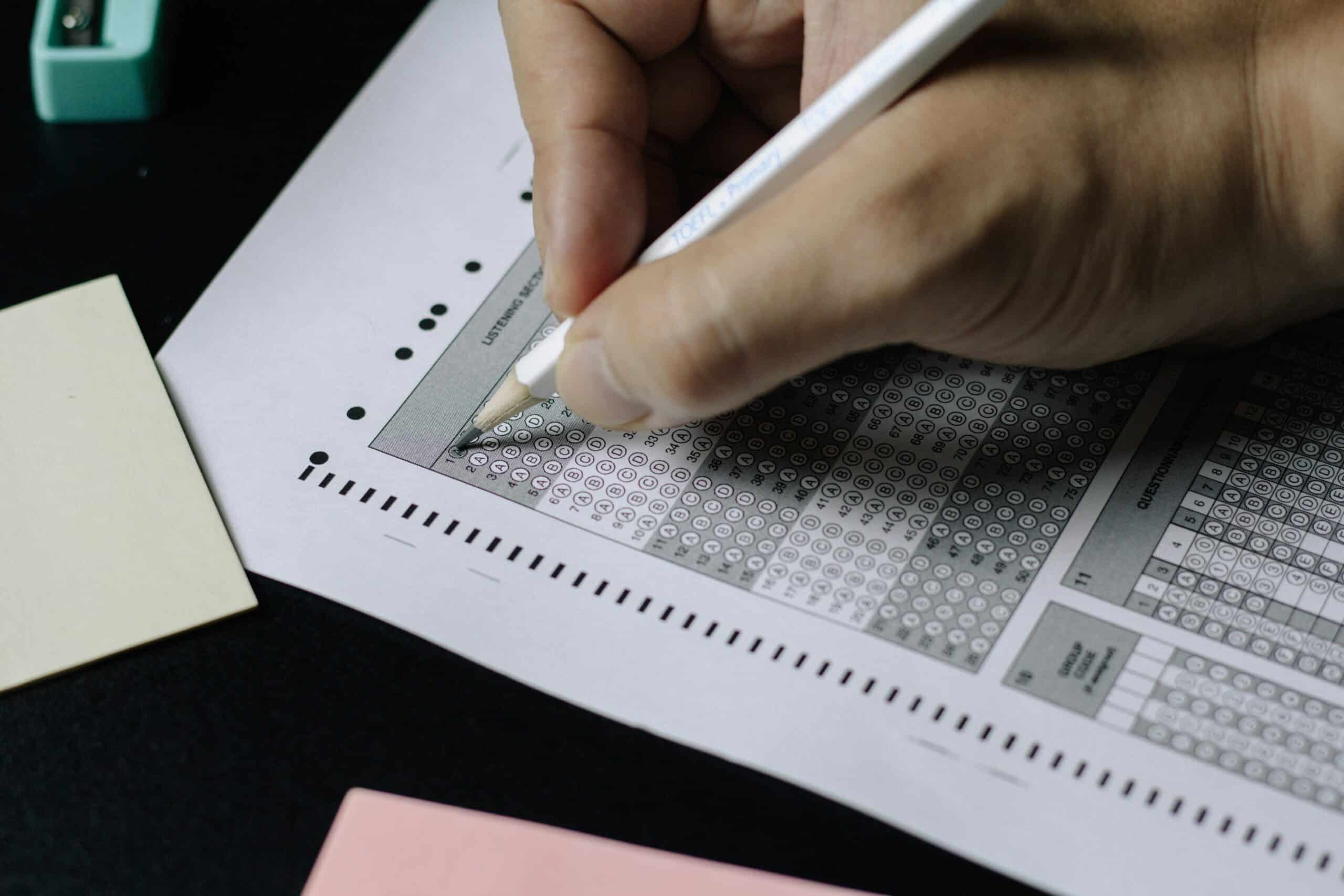
AP exam season stops feeling abstract around mid-March. By now, you are no longer “getting started.” You are in the stretch where a smart, structured plan can still move your score in a meaningful way.
That is the good news.
The 2026 AP Exams run across May 4–8 and May 11–15, which means students starting now still have a real window to improve — if they stop revising randomly and start working to a plan.
This guide breaks down exactly how to study for AP exams in 8 weeks, whether you are taking one AP subject or juggling several at once. It is built for high school students who need something practical, not another vague list of “study tips.”
Why March Is the Right Time to Start AP Exam Prep
March is when AP revision needs to become deliberate.
By this point in the school year, most students fall into one of three groups:
- They have covered most of the course but have not reviewed properly.
- They have class notes everywhere but no real study system.
- They are behind in one or two units and are quietly hoping they can catch up later.
Later is now.
An 8-week plan works because it gives you enough time to do three things properly: learn weak content, practice exam-style questions, and fix timing problems. AP exams test not just knowledge, but how well you can apply it under exam conditions. College Board also points students to course-specific exam details, AP Classroom resources, and AP Daily videos as key ways to prepare.
Who This AP Study Plan Is For
- High school students taking AP exams in May 2026
- Students revising for multiple AP subjects at once
- Students who need a realistic study schedule around school, homework, and extracurriculars
- Early college students helping younger siblings or tutoring AP students
- Anyone who wants a better revision system than “study more”
If you are only taking one AP exam, you can still use this plan — you will just have more time to go deeper.
The 8-Week AP Exam Study Plan at a Glance
Here is the overall structure:
| Weeks | Phase | Focus |
| 1–2 | Audit & Organise | Figure out what you know, what you don’t, and what each exam expects. |
| 3–4 | Relearn Weak Topics | Target the units, skills, and question types costing you marks. |
| 5–6 | Practice Under Pressure | Shift from passive review to timed questions and partial exam sections. |
| 7–8 | Final Exam Preparation | Full practice, tighten timing, memorise essentials, and reduce panic. |
That is the framework. Now here is how to do it properly.

Week 1: Build Your AP Exam Game Plan
The first week is not about “studying hard.” It is about getting clear.
1. List Every AP Exam You Are Taking
Write down each subject and the exam date. In 2026, AP exams are scheduled across May 4–15, with late-testing dates beginning May 18 for eligible cases.
2. Check Each Exam Format
You need to know:
- Multiple-choice weighting
- Free-response or essay sections
- Timing per section
- Calculator rules (if relevant)
- Whether any part of the exam is digital or requires Bluebook access
College Board’s course and exam pages are the source of truth for this.
3. Do a Fast Self-Audit
For each subject, rate every unit or topic:
- Strong — you could answer questions on it now
- Okay — you mostly get it but make mistakes
- Weak — you avoid it because it is messy
Be honest. This is where most students waste time — they revise what feels familiar because it is less uncomfortable.
4. Gather Your Materials
You need one place for everything: class notes, teacher handouts, textbooks, formula sheets, practice questions, AP Classroom resources, AP Daily videos, and past revision documents.
If your materials are scattered, your revision will be scattered too.
Week 2: Create a Realistic AP Revision Schedule
This is where most plans fall apart. Students make a revision timetable based on fantasy, not on real life.
A good AP revision schedule is specific, flexible, repeatable, and built around your school day and energy levels.
How Many Hours Should You Study for AP Exams?
There is no single perfect number. A practical starting point for most students in March:
| Number of APs | Suggested Weekly Hours |
| 1 AP subject | 4–6 focused hours |
| 2 AP subjects | 6–10 focused hours |
| 3+ AP subjects | 8–14 focused hours, split across priorities |
Focused hours matter more than inflated totals. Three distracted hours is not the same as one proper hour.
A Realistic Weekly Study Structure
For most students, this works better than marathon sessions:
- 2–3 weekday sessions: 45–60 minutes each
- 1–2 weekend sessions: 90–120 minutes each
- 1 weekly review block: 30 minutes to adjust the plan
Instead of telling yourself “I’ll study AP Bio all day Saturday,” try this:
- Tuesday: AP Bio Unit 5 review — 50 minutes
- Thursday: AP Lang timed essay planning — 50 minutes
- Saturday: AP Bio multiple choice + error review — 90 minutes
- Sunday: AP Lang rhetorical analysis practice — 90 minutes
That is real. That is sustainable.
Weeks 3–4: Focus on Weak Topics First
This is the part students resist, and it is the part that changes results.
Do not spend two weeks colour-coding notes on topics you already understand. Use these weeks to clean up the weak areas that are blocking progress.
What to Do in Weeks 3–4
For each subject:
- Pick your weakest 2–4 topics or units.
- Review the core content.
- Answer exam-style questions on that topic.
- Mark what went wrong.
- Repeat until the topic is no longer a disaster.
Subject-Specific Examples
AP Biology
Review cell communication, genetics, or natural selection. Use diagrams, flashcards, and short-answer practice. Focus on data interpretation, not just memorisation.
AP Calculus AB
Revisit derivatives, integrals, and applications. Do worked examples, then solve without notes. Build speed only after understanding improves.
AP U.S. History
Review by time period and themes. Practice thesis writing and evidence selection. Stop trying to memorise the entire course in one block.
AP English Language
Practice rhetorical analysis, argument structure, and timed planning. Annotate sample prompts. Compare strong versus weak responses.
The method is the same across subjects: learn, apply, review, repeat.
Use AP Resources Properly
College Board highlights AP Daily videos, topic questions, and progress checks through AP Classroom as built-in prep tools. These are useful because they align with the course framework instead of sending you off into random internet revision.
Weeks 5–6: Start Practising Like the Exam Is Real
Reading notes is not exam practice. Watching videos is not exam practice. Highlighting your textbook is definitely not exam practice.
By Weeks 5 and 6, you need to be doing questions.
Your Focus Now
- Timed multiple-choice sets
- Short free-response drills
- Essay planning under time pressure
- Identifying repeated mistakes
- Improving pacing
The Best Review Method: Mistake Tracking
After every practice session, write down:
- What question type you missed
- Why you missed it
- What the correct approach was
- Whether the issue was content, timing, or misreading
This is how strong students improve fast. They do not just “do more questions.” They build a record of what keeps going wrong.
Example Mistake Log
| Subject | Topic | Mistake | Why It Happened | Fix |
| AP Chem | Equilibrium | Chose wrong equation setup | Rushed and mixed up variables | Redo 5 equilibrium problems slowly |
| AP Lang | Argument essay | Weak evidence | Planned too generally | Spend 5 mins outlining examples first |
| AP Stats | Probability | Formula confusion | Did not identify distribution type | Create one-page formula trigger sheet |

Weeks 7–8: Final AP Exam Prep Without Burning Out
The last two weeks are not for panic revision. They are for tightening.
What to Do in Week 7
- Complete one fuller timed practice for each subject.
- Review your errors carefully.
- Make one-page summary sheets for key facts, formulas, or essay frameworks.
- Keep your study blocks focused and calm.
What to Do in Week 8
- Reduce overload.
- Revise summary sheets.
- Practice short question sets.
- Review exam logistics.
- Sleep properly.
This matters more than students want to admit. There is no prize for being awake at 2 a.m. memorising terms badly.
Sample 8-Week AP Study Timetable
Here is a simple version for a student taking AP Biology and AP English Language.
| Weeks | AP Biology | AP English Language |
| 1–2 | Audit subject, list weak units, gather notes | Audit subject, list weak units, gather notes |
| 3–4 | Units 3 & 5 review, data analysis practice | Rhetorical analysis, argument structure, timed planning |
| 5–6 | Timed MCQ + FRQ sets, mistake log | Timed essay sections, scoring review, mistake log |
| 7–8 | Fuller timed paper, summary notes, lighter final days | Fuller timed section, summary notes, exam-day prep |
How to Study for Multiple AP Exams at Once
If you are taking several APs, the main mistake is giving every subject equal time. They are not equal.
Prioritise Based On
- How soon the exam is
- How weak you are in that subject
- How much content still needs review
- How much score movement is realistically possible
Example Priority Split (4 AP Exams)
| Subject Strength | Weekly Time Allocation |
| Strongest subject | 15% |
| Okay subject | 20% |
| Weak subject | 30% |
| Weakest / highest-stakes subject | 35% |
That split will change over time, but the point is simple: time should follow need.
Rotate Intelligently
Do not do the same type of revision for four hours straight. A better rotation: one problem-solving subject, one reading or writing subject, one shorter review session — with breaks between them. This reduces fatigue and helps you stay accurate.
Best AP Study Methods for High School Students
Not all revision methods are worth your time. Some feel productive but do very little.
What Works
- Active recall — Close the book and pull information from memory.
- Spaced repetition — Review topics again after gaps instead of cramming once.
- Timed practice — Get used to answering under real constraints.
- Error review — Study your mistakes, not just your notes.
- Interleaving — Mix related topics or question types instead of drilling only one thing for hours.
What Wastes Time
- Rewriting notes word for word
- Highlighting everything
- Watching revision videos without practising
- Making a huge timetable you never follow
- Doing only the topics you already like
AP Exam Week Checklist
As exam week gets closer, stop making avoidable mistakes.
Before the Exam
- Confirm your exam date, time, and location with your school.
- Know whether your exam requires digital access or login details.
- Check calculator rules if relevant.
- Pack pencils, pens, and approved materials.
- Bring a school-issued or government-issued photo ID if you are not testing at your own school.
- Sleep properly the night before.
Do Not Do This
- Stay up late cramming.
- Start a brand-new topic the night before.
- Do five hours of revision the morning of the exam.
- Rely on “I’ll remember my login.”
Common Mistakes Students Make When Studying for AP Exams
- Starting with the easiest subject. It feels good. It is usually the wrong move.
- Revising without doing questions. AP exams reward application, not just familiarity.
- Ignoring timing until the end. If you cannot finish sections on time, content knowledge alone will not save you.
- Making a revision plan that is too ambitious. A plan you can follow beats a perfect plan you abandon on day three.
- Treating all AP subjects the same. Different exams require different strategies. AP Calculus is not revised the same way as APUSH or AP Lang.
Frequently Asked Questions About AP Exam Revision
When should I start studying for AP exams?
Ideally earlier, but March is still a strong time to start. With the 2026 AP exam window beginning on May 4, students starting around mid-March still have roughly eight weeks to prepare strategically.
How many hours a day should I study for AP exams?
Enough to be consistent, not enough to wreck your energy. For most students, 45–60 minute weekday sessions plus longer weekend blocks work better than trying to revise all evening every day.
Is 8 weeks enough to study for AP exams?
Yes, if you use the time properly. No, if you spend it passively reading notes and avoiding weak topics.
What is the best way to study for AP exams?
The strongest approach is a mix of targeted content review, active recall, timed practice, reviewing mistakes, and a clear revision schedule.
Should I use AP Classroom and AP Daily?
Yes. College Board specifically points students to AP Classroom, topic questions, progress checks, and AP Daily videos as preparation resources.
The Best AP Study Plan Is the One You Will Actually Follow
The goal is not to build a perfect revision fantasy. The goal is to get organised, identify weak areas, and put the next 8 weeks to work.
If you are taking AP exams in 2026, there is still time — but only if your revision becomes specific now.
Start with the exam dates. Break each subject into smaller tasks. Put those tasks into a schedule you can actually follow. Then keep going, week by week.
That is how students stop feeling overwhelmed and start making progress.


