

With GCSE exams starting May 4th, here’s what students, parents, and teachers need to know about managing stress, recognising warning signs, and finding support — plus what the government’s new education reforms mean for student wellbeing.
If you’re a Year 11 student reading this, you’re probably already feeling it. The revision timetables pinned to your wall. The practice papers stacking up. The creeping awareness that GCSEs are now weeks away, not months.
You’re not imagining it — this is genuinely one of the most pressurised moments in a young person’s life. And you’re navigating it during a period of real uncertainty: a shifting curriculum, a cost-of-living crisis still squeezing families, and a world that can feel like it’s moving faster than anyone can keep up with.
This article isn’t going to tell you to “just breathe” or “stay positive.” Instead, we want to have an honest conversation about what GCSE stress actually looks like in 2026, what’s changing in the system around you, and — most importantly — what you can actually do about it.

The Numbers Behind the Pressure
- 77% of teachers report Year 11 exam anxiety
- 1 in 4 UK 16-24s experience a mental health problem
- 73% of teachers say mental health worsened post-reform
Let’s start with what we know. According to a survey by the Association of School and College Leaders (ASCL), 77 per cent of teachers reported that their Year 11 students had experienced mental health issues linked to exam anxiety. Nearly half said students had arrived at or left the exam hall in visible distress. And 65 per cent of school leaders said students had missed school entirely because of exam-related anxiety.
These aren’t outliers. UK-wide data shows that roughly one in four young people aged 16 to 24 experiences a common mental health problem. The World Health Organisation estimates that about one in seven teenagers globally has a diagnosable mental health condition — with anxiety being the most prevalent.
The structure of GCSEs themselves plays a role. When reforms shifted most assessment to end-of-course exams and reduced coursework, the result was a system where students now face an intense six-week exam window with significantly more hours of examination time than previous cohorts. In a teacher survey, 73 per cent said student mental health had worsened since those changes were introduced.
For the 2026 cohort specifically, there are some concessions worth knowing about. According to Ofqual’s official student guide, students sitting GCSE maths, physics, and combined science this summer will again receive formula and equation sheets — a support measure originally introduced during the pandemic that has now been extended through 2027. It’s a small but meaningful acknowledgement that the pressure on this generation of students is real.
What’s Actually Changing: The Government’s New Vision
In February 2026, the government published Every Child Achieving and Thriving, a sweeping schools white paper that sets out a ten-year plan for education in England. While much of the media attention focused on SEND reform and school trust structures, there’s a section that matters enormously for anyone struggling with exam-season mental health.
The white paper commits to expanding Mental Health Support Teams — currently available in around 60 per cent of schools — to every school and college in England by the end of this parliament. That’s a significant promise. It means trained mental health professionals embedded in schools, not just posters on corridor walls directing you to a helpline.
The paper also explicitly names children’s mental health as a barrier to school attendance and frames wellbeing as central to educational success, not separate from it. For a government education document, that framing matters. It signals that the conversation is shifting from “how do we get students to perform?” to “how do we make sure students are well enough to learn?”
There’s also the broader curriculum and assessment review, which has recommended moving away from what it called an “inflexible approach” to compulsory GCSE resits in English and maths. While major curriculum reforms won’t land until 2028 or later, the direction of travel suggests the government recognises that the current system is causing real harm.
Recognising Stress Before It Becomes a Crisis
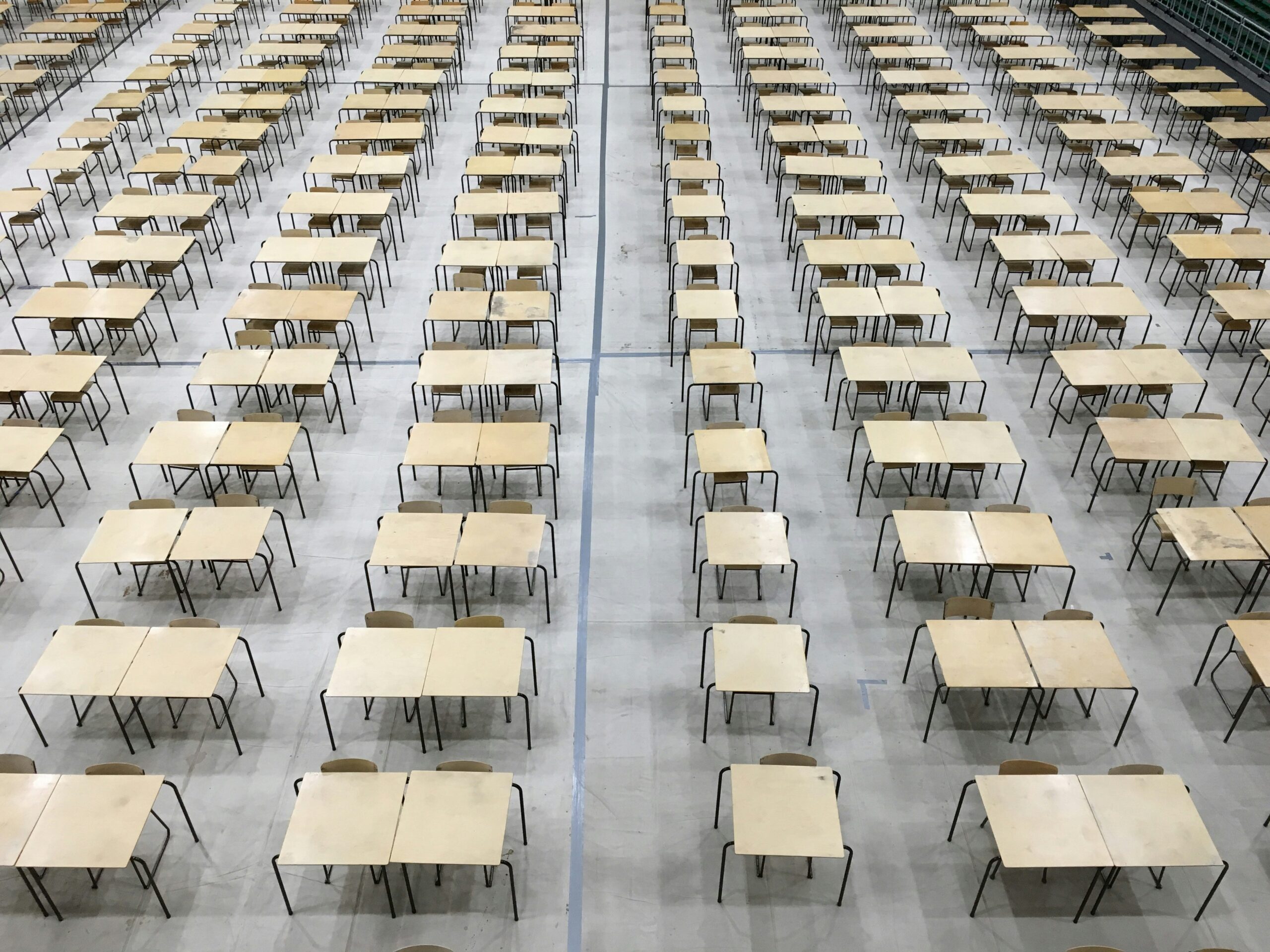
One of the trickiest things about exam stress is that it doesn’t always look like what you’d expect. It’s not always crying in the toilets before a paper (though it can be). More often, it’s subtler than that. The NHS has a helpful overview of how stress manifests in young people, and Mind’s guide on student mental health is worth bookmarking.
Here’s what to watch for:
Changes in sleep.
You might find it harder to fall asleep because your mind races through everything you haven’t revised. Or you might sleep too much — using it as an escape from the anxiety of being awake.
The guilt-avoidance cycle.
This is one of the most common patterns students describe: you know you should be revising, so you feel guilty. The guilt makes you anxious. The anxiety makes it impossible to start. So you avoid it. And then you feel even more guilty. Repeat. (If this sounds familiar, our guide to building effective study habits has some practical ways to interrupt the cycle.)
Physical symptoms.
Headaches, stomach problems, tight shoulders, jaw clenching. Stress lives in the body as much as the mind, and during exam season, your body is often the first thing to tell you something is wrong.
Withdrawal.
Pulling back from friends, from family, from hobbies you normally enjoy. If everything feels flat or pointless, that’s worth paying attention to.
Irritability that surprises you.
Snapping at people you care about over nothing, or feeling a disproportionate rage at small inconveniences. That’s often anxiety wearing a different outfit.
None of these things mean you’re weak or failing. They mean you’re a human being under pressure, and your brain and body are responding to it.
What Actually Helps (Beyond “Revise in 25-Minute Blocks”)
There’s no shortage of generic study tips online. Here’s what tends to make a real difference, based on what students and mental health professionals consistently report.
Name the fear, specifically.
“I’m stressed about GCSEs” is too vague for your brain to do anything with. Try to get precise. Is it that you’re afraid of disappointing your parents? That you won’t get into the sixth form you want? That everyone else seems more prepared than you? Once you’ve named the specific fear, you can actually assess whether it’s realistic — and what you’d do if the worst happened.
Build rest into your plan, not around it.
Most revision timetables treat rest as the leftover time after studying. Flip that. Decide first when you’ll stop each day, and plan your revision backwards from there. A realistic plan you actually follow beats an ambitious one you abandon after three days. Tools like MyStudyLife’s planner can help here — you can map out your exam dates, set revision tasks for each subject, and use the built-in Pomodoro timer to keep sessions focused without burning out.
Talk to your school.
This is the one students resist most, but it can make the biggest practical difference. If you’re struggling, your school can apply for access arrangements — extra time, a separate room, rest breaks. These aren’t cheating; they’re there specifically for situations like this. With ASCL data showing that 74 per cent of schools already make alternative arrangements for students with exam anxiety, you won’t be the first to ask. UCAS also has a helpful guide on navigating mental health support as you plan your next steps.
Move your body, even a little.
This isn’t about training for a marathon. A twenty-minute walk, a kickabout in the garden, dancing badly in your bedroom — anything that gets you out of your chair and out of your head for a bit. The evidence on physical activity and anxiety reduction is some of the strongest in all of mental health research.
Limit the comparison.
Social media during exam season is a highlight reel of other people’s revision. No one posts about the three hours they spent staring at a textbook without taking anything in. If scrolling makes you feel worse, it’s okay to mute, unfollow, or step away for a while.
Use your tools wisely.
If you haven’t already, check out our final exam study tips — including active recall techniques, how to use past papers effectively, and why teaching someone else is one of the most powerful revision methods there is. We’ve also compiled a list of the best online study tools for students to pair with your revision schedule.
Let results day be future-you’s problem.
GCSE results come out on Thursday, 20 August 2026. Between now and then, your only job is to show up and do your honest best. The new Education Record app means you’ll be able to access your results digitally for the first time this year — a useful modernisation, but also a reminder that results day is a logistical event, not a verdict on your worth as a person.
A Note for Parents and Teachers

If you’re reading this as an adult in a student’s life, the single most useful thing you can do is make space for them to be honest about how they’re feeling without trying to immediately fix it.
“How are you feeling about exams?” is a better opener than “Have you revised today?” Not because revision doesn’t matter, but because a student who feels supported is far more likely to actually sit down and study than one who feels surveilled. (Our guide on digital planners for teens explores how to support your child’s independence without hovering.)
Watch for changes in behaviour, not just academic performance. A student who’s suddenly withdrawn, not sleeping, or unusually irritable may be struggling more than they’re letting on. The Anna Freud Centre has excellent resources for educators navigating student mental health, and the Charlie Waller Trust offers free toolkits specifically for schools.
The white paper’s commitment to mental health support teams in every school is promising, but in the meantime, the adults already in a student’s life — parents, teachers, tutors, older siblings — are the frontline.
And please, keep GCSE grades in perspective. They matter, but they are not the only door. Students who don’t get the grades they hoped for still go on to do remarkable things. The path is rarely as linear as the education system implies.
Where to Get Support
If you’re struggling and need to talk to someone, these services are free, confidential, and available now:
0800 1111 — free, 24/7 for under-19s
Text YM to 85258 — free, 24/7
116 123 — free, 24/7
Text SHOUT to 85258
Student mental health resources
You don’t have to be in crisis to reach out. Feeling overwhelmed is reason enough.
The Bigger Picture
Here’s the truth that gets lost in exam season: your GCSEs are important, but they are one chapter in a much longer story. The education system is changing — slowly, imperfectly, but meaningfully. The government’s new white paper, the curriculum review, the expansion of mental health support — all of these signal a growing recognition that academic achievement means nothing if students aren’t well enough to benefit from it.
In the meantime, you have five weeks before exams begin. That’s enough time to make real progress if you use it well, and enough time to ask for help if you need it.
You’re allowed to find this hard. You’re allowed to need support. And you’re allowed to believe that who you are matters more than what you score.
Get organised for GCSE season

MyStudyLife helps over 24 million students manage revision, track exams, and stay on top of deadlines. Free on iOS, Android, and web.


