GCSEs in England are graded from 9 (highest) to 1. A grade 4 is the government’s “standard pass” and a grade 5 is a “strong pass”, roughly the old high C or low B. Most sixth forms and colleges ask for a 4 or 5 in English and maths, and higher in subjects your child wants to continue.

How does the 9 to 1 scale compare with A* to G?
The two scales are not directly equivalent, but they line up at key points. AQA says grade 5 is equivalent to a high C and low B on the old system. A guide from Oxford University Press adds that a 9 is not the equivalent of an A*, 8 sits between A* and A, 7 is equal to an A, and 6 sits just above the old B.
| New grade | Roughly equal to | Description |
|---|---|---|
| 9 | Above A* | Highest, awarded to fewer students than A* |
| 8 | Between A* and A | Very high |
| 7 | A | Bottom of 7 is about the bottom of an old A |
| 6 | Just above B | Solid |
| 5 | High C, low B | Strong pass |
| 4 | C | Standard pass |
| 3 to 1 | D to G | Below a standard pass |
A grade U means ungraded: the minimum standard for a grade was not reached.
What counts as a pass?
There are two thresholds. Grade 4 is the standard pass. Grade 5 is the strong pass, and school league tables are based on the percentage of pupils achieving a 5 or above in English and maths, according to a guide from Amazing Apprenticeships. That is why you will hear both numbers quoted at parents’ evenings.

Do GCSE grades matter for sixth form and beyond?
Yes. OUP notes that some colleges and sixth forms only allow A-level subjects if students achieved particular grades at GCSE, and may require specific grades in specific subjects. Apprenticeship requirements vary by employer and role. If grades come in lower than expected, speak to the school first, since teachers can explain the options.
How are the top grades decided?
AQA explains that the approach to the top grades is the same for every subject: a formula means around 20% of all grades at 7 or above are a grade 9. Grade boundaries are set each year, so a raw mark that earns a 6 one summer may earn a different grade the next. GCSE Combined Science gives a double grade on a 17-point scale, from 9-9 to 1-1. Wales still uses A* to G.
How can you follow progress through the two-year course?
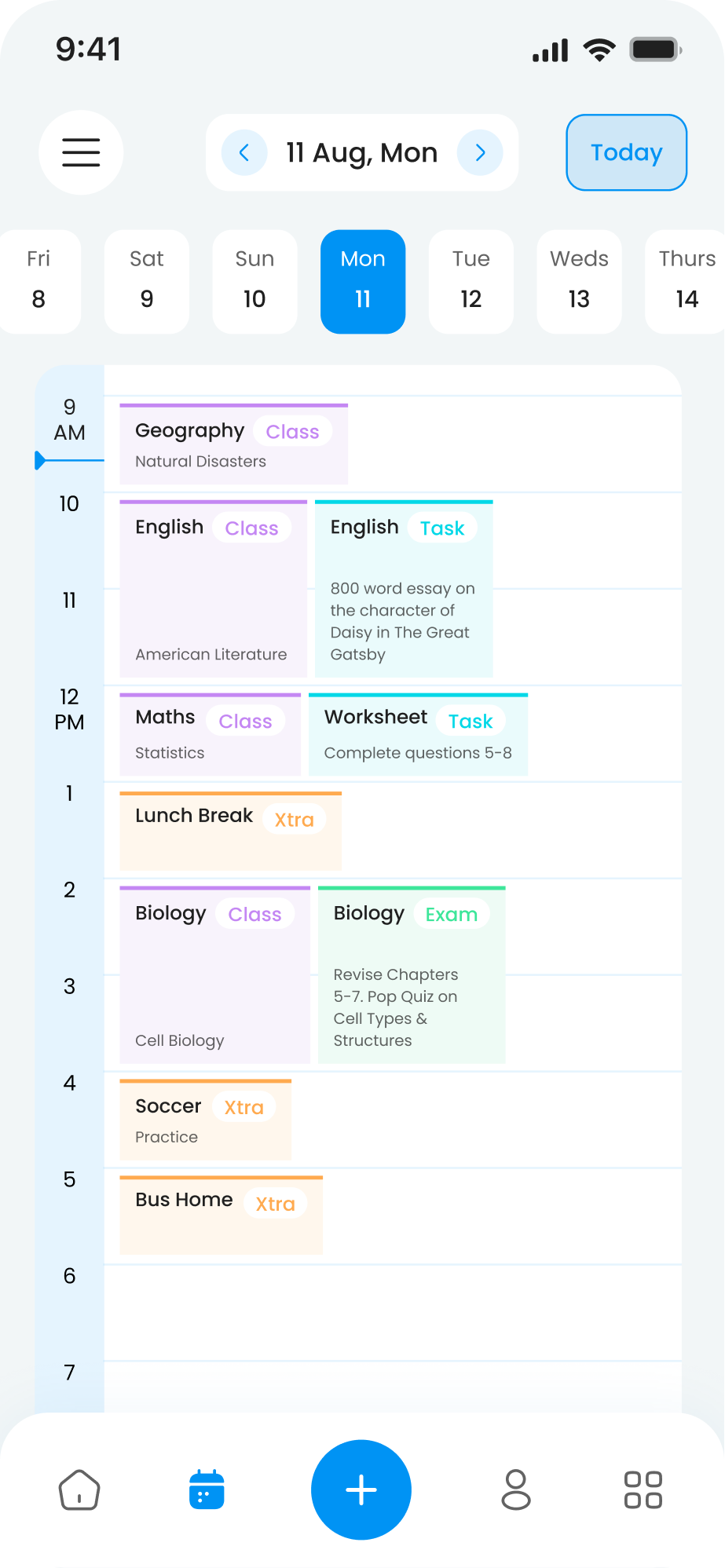
Mock results, coursework deadlines and exam dates all arrive in one crowded stretch. In MyStudyLife your child can log mock scores and results, see the trend by subject, and count down to each exam. A revision timetable turns the weakest subject into a weekly plan. As a parent, Family Connect lets you see upcoming exams, homework and posted grades without asking every night. If a mock result dips, this guide to talking to your teen will help you open the conversation.

FAQ
Is a grade 4 a pass at GCSE?
Yes, grade 4 is the standard pass and grade 5 is the strong pass.
Is a grade 9 the same as an A*?
No. A 9 is harder to achieve than an A*, because fewer students receive it.
Do all UK nations use 9 to 1?
No. Wales still awards A* to G.
Related reading: Revision timetable for mocks | How to monitor your child’s grades | Study Tips